





Make These Items This Summer to Support Math Instruction {Giveaway}
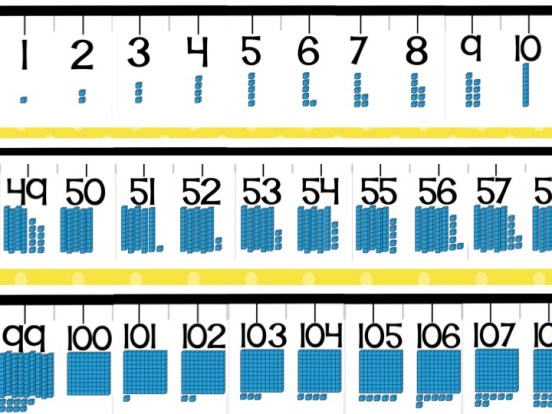
Here are a few items that you may want to have to spruce up your classroom this fall. You may need a number line that adds images to support student’s understanding of numbers with base ten blocks. This number line is over 40 feet long and will serve as a vital support tool all year long–great decoration above your white board. This would be great for 1st through 2nd grades!
Maybe you teach third or fourth grade and need more fraction visual support. Why not have a fraction number line with visual supports?


You know you will have someone who doesn’t know their addition facts or multiplication facts. Why not spend some time making a set of flashcards while you are relaxing this summer. Both of these come with printable backs! What could be better?!


Now for a giveaway!
Prize: $100 Teachers Pay Teachers Gift Card
GIVEAWAY DETAILS:
Giveaway Organized by: Kelly Malloy
| Kelly MalloyBrowse over 140 educational resources created by Kelly Malloy in the official Teachers Pay Teachers store. |
(An Apple for the Teacher)
Co-hosts: An Apple for the Teacher, The Fun Factory, 180 Days of Reading, Kelly McCown, It’s a Teacher Thing, Mickey’s Place, LIVIN’ IN A VAN DOWN BY THE RIVER, A Plus Kids, Sandra Naufal, TeachingLife, The Chocolate Teacher, Star Kids, Paula’s Primary Classroom, Ms. K, Roots and Wings, Mrs Wenning’s Classroom, Kamp Kindergarten, Samson’s Shoppe, The Monkey Market, Jackie Crews, TheBeezyTeacher, Priscilla Woodard – Tasked 2 Teach, Kathryn Watts, AR Tech Star – Eva Griffin, Pint Size Learners, and The Froggy Factory.
Rules: Use the Rafflecopter to enter. Giveaway ends 7/13/19 and is open worldwide.
Are you a Teacher Blogger or Teachers pay Teachers seller who wants to participate in giveaways like these to grow your store and social media? Click here to find out how you can join our totally awesome group of bloggers!
| Giveaways To Grow Your BlogClassroom tips,teaching ideas, and resources for the upper elementary classroom. Teacher Giveaways |
Stop by later this month because there will be MORE GIVEAWAYS!!!
What Do You Do in Your Math Intervention Group?
So, I have a math intervention group. I have done intervention lots of ways…and the thing is, there are always core things that kids struggle with. Those things without a double are always addition, subtraction, and multiplication facts. Next, they struggle with the standard regrouping algorithm. And, why do they struggle? BECAUSE, of course, no one sits with them at home to help them learn these things if the concepts don’t sink in during school time.
Enter me. I have been working with some students the past few weeks on subtraction regrouping…with success! Here is what I have done, and what I have discovered. First of all, several of the intervention students were able to regroup UNTIL they had to regroup across zeros. They weren’t sure what to do when they had to borrow two places over. How did I figure this out you ask? Well, with my group of four students, I gave them a worksheet. (gasp! a worksheet??!!) Yes, I gave them a worksheet and had them work a few and checked to see which ones they were getting correct and which ones they were missing. I would have them work one problem and hand me the sheet to check. This way they were getting immediate feedback. During this time, I realized that they weren’t getting the answers right unless they borrowed across zeros or had to borrow two places over. I used and am so thankful for Super Teacher Worksheets subtraction worksheet generator! This conveniently allowed me to print a new worksheet (complete with answer key) when I felt they needed practice.


Now when I realized they needed help with regrouping across zeros, I realized there was a regrouping misunderstanding. So, I used the Singapore math number discs method to show them what was happening when they were regrouping. After showing them and having them do one with me, the next day they performed a lot better on their subtraction regrouping problems. I have a SMART board lesson and worksheets if you would like some for students to practice with. The grid is already made for the students…these however do not have seven digits like the worksheet above.


A few other things I did to help the students think about the regrouping process were.
- Say this little rhyme…”More on the floor, go next door, and get 10 more”. This way they would always know they were bringing ten over…not 9, not 8.
- Sometimes when students want to skip over a place value column, I would describe it as driving in traffic. Your car doesn’t just fly over the other column, it has to change lanes one at a time…it can’t be a helicopter.
- Another idea I mention is place value columns in relation to the drawers in a cash register. If you cash in your $100 bill for others, you trade it in for 10 $10, then you trade in the $10 for 10 $1 bills.
Try these things and soon you will be on your way to having expert subtraction regroupers!
Adding & Subtracting Ten(s)–1st Grade Skill or Intervention?
There are certain skills that if not learned early in math will be a detriment throughout a student’s entire math career. Learning to add ten or subtract ten is one of these skills. In later elementary grades, if the simplistic skill of adding and subtracting ten is not learned students will struggle with other math concepts.
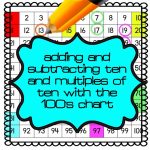
For these reasons, I believe that is why this product is one of the best sellers in my shop. The skill of adding or subtracting ten is visually taught through patterns on the hundreds chart. I have newly revised this product to include answer keys, new borders, and new fonts. If you are looking for a product to teach your students to add or subtract ten— a skill they will need for their entire school career, look no further.


A Discovering Patterns worksheet with the hundreds chart and Mental Math Fluency Check are included in this packet for each of the following:
*Adding 10 to a One-Digit Number
*Adding 10 to Multiples of 10
*Subtracting 10 from Multiples of 10
*Adding 10 within 100
*Subtracting 10 within 100
*Adding Multiples of 10 within 100
*Subtracting Multiples of 10 within 100
Answer keys are also included.
Are You Using Addition Flashcards Effectively?
I recently created a video showing you how to use Addition Flashcards effectively. There are many ways to do this effectively using patterns. In the video I show you two of these patterns you can use to teach addition math facts. This video is a result of a parent teacher conference of which I was a part. During the conference the classroom teacher told the parent to use flashcards by having the child make a stack of the ones she knew and the ones she didn’t know. Because of this, I realize many people aren’t aware of how flashcards can be used with patterns to alleviate the rote memorization. Using patterns allows students a way to relate their learning to prior knowledge. Therefore student learning becomes more than just memorizing facts. To learn more watch below…
[embedyt] https://www.youtube.com/watch?v=-SDyhc9kdiU[/embedyt]
The flashcards in this video came from this math packet below:


How Can You Make the Most of Addition Flashcards?
STOP IT! JUST STOP IT! If you want to bore kids out of their minds and keep them from wanting to learn their addition facts, give them a box of flash cards and say, “Here, practice these.”
- Kids are overwhelmed with the whole stack.
- Kids are bored and most likely off task shortly after you have given them the stack of cards.
- They have no way to help make connections with the patterns if the cards are disorganized.
For these reasons and probably a few more, using flashcards cause little impact upon learning.
SO….Do this!
Have students sort their cards by helping strategy. For example, have students pull out all of the doubles facts and stack them. Then have them pull out all of the doubles + 1 facts and stack them. Haves students layer the cards so that the doubles sit on top of the doubles + 1 facts. That way they look at one that is familiar and then progress to one that isn’t as familiar. For example, place 5 + 5 on top of 5 + 6. If 5+5=10, 5+6 must be one more–11.

The easy doubles facts helps students know that the doubles +1 facts are just one more in their answer. Not only this, but you are teaching properties of operations when students layer their flashcards. Furthermore, layering the cards by helping strategy helps them make a matching game of sorts out of their flashcards.
You can also layer sums of ten on top of sums of ten + 1 for the same effect etc. Always have students layer their math fact cards to help them learn patterns. When they learn facts with patterns, they have something to “hang” or attach their learning to which produces a higher impact than handing them the whole box.
For a printable version of these flashcards complete with printable backs, you can go here.

All sums to 19 are included. These cards ARE separated by helping strategy complete with teacher notes so that you can print them in color and arrange them more easily by their helping strategy.
How to Intervene with Children Who Don’t Know Their Addition Facts
I have worked with children from 2nd grade on up to help them learn their addition facts. One common denominator exists among all of these students. That is THEY DON”T SEE PATTERNS! I remember having a difficult time learning my 9’s facts when I was growing up. To help myself, I just took one off of the number I was adding to 9 in the ones place. I noticed this pattern. No one taught me this. When I was growing up, learning facts was like, “Ok, Class, let’s learn all our 8s facts, let’s learn all our 6s facts and so on.” This is not effective for students who don’t recognize patterns on their own. Now with the common core mathematical practices, we should be teaching children to explore patterns through thoughtful placement of number facts to help them recognize these patterns. Giving students opportunities to see the patterns will result in more students who are fluent in their facts. I have shown examples of this before such as in this post about using 10s to help with adding 9s.

But now I have actually put all of my work with struggling learners into a packet which could be used whole group for grades 1 or 2. At the 3-5 level this could be used for students in intervention or as part of the RTI process. Here is a look at the packet that I have put together to help students become fluent with all of their addition math facts. It is on TPT !


You can also try out a little sample of this product for FREE here.
Are Your Students Adding and Subtracting 10?
Are you teaching your firsties to add ten, subtract ten, add 1 and subtract 1? The week before Christmas we added this game to one of the selections in the students’ math stations. This game is called “Bubble Gum Pop”. The kids absolutely LOVE it!!! 
Students move “bubble gum balls” (bingo chips) up and down the 100’s chart mat according to the spinner. The game is differentiated for students who need more of a challenge so that they can use a mat that counts to numbers past 100 or they can use a bubble gum spinner that allows them to even add or subtract multiples of up to 20.
 In this photo above, students are tied with both having an equal number of chips on the board. The one who knocks the other student’s chips off the board first is the winner. What makes this game fun is that there is an element of chance when students land on the pictures, their chips are out. Also, the game requires children to know which direction to move on the board to add or subtract 10s and 1’s so they are learning at the same time.
 The game is also available in color. I copied it in second grade however on colored paper, but ended up liking the black and white better because I felt the students could see the chips and numbers better on the board. The color definitely did make the game happier though.
What do you see? A Freebie?
I have been missing in action from my blog lately. Hopefully this will make it up to all of you faithful followers 🙂 ! I have been working on this packet of addition fact lessons that I used with intervention groups all last year with much success. The lower students really seemed to enjoy the thinking aspect of these lessons. I have been working on putting this into a format that is cute enough to post. Because I have been working on the whole packet for months, I thought I would give you a free preview sample in the meantime. I will be posting the whole packet soon for sale. Without further adieu, here is the Freebie! I hope you enjoy using it!

Thanks to Winchester Lambourne for the spooky eyes clip art!
Best Results Ever with Kids Learning Math Facts!
I am going to share with you what I did this year to be successful in helping our school be more fluent in math facts than ever before! We have had Reflex Math for about 2 and a half years now. The first year everyone didn’t know much about what to expect. The second year some classes were making progress with it. Now this year being in a new school with new people (we consolidated with another school), we had a slow start but by the end students’ fluency took off. Albeit some of the increase has been due to the increase of available technology and the new Reflex Math app on the iPad, but students this year were more motivated to achieve than ever before. I believe that is due to a few things I added to encourage friendly competition!
1. I added the 70% and up club. What child doesn’t want to be a part of a club?! When children reach the 70% mark, I post their certificate on the wall with their pictures in a central location. I try to take their pictures close to window light so they look nice. If students’ certificates are up too long without their picture they make sure they let me know about this. I print the certificates off weekly. These are available to easily print off from the home dashboard screen underneath the unprinted milestones link. I also have these students names called on the announcements with “Welcome to the 70% and up club…” and then I have their names called out.

2. To encourage students along the way to reach the 70% and up club, I send home their certificates if they are below 70%. Students get certificates for answering facts and they get certificates for answering a certain amount of facts. One of these certificates may say something like Joe Bob solved 2,000 facts. If the certificate is one that is fluency related then I attach a little prize such as a pencil or fake tattoo. These certificates may say something such as Mary Sue learned 25 new fluent facts. All certificates that are 70% and up go on the wall. I replace the 70% with an 80% or 90% certificate so that others walking by can see their achievement.
3. I have a special place to hang students who achieved 100% fluency during the year. These students have their picture retaken again for this spot on the wall. Also, I had a special ceremony for these students at the end of the year in which I invited the principal and guidance counselor to shake the students’ hands and pin them with a special pin I ordered from Jones Awards. I had wanted to order them all trophies, but I didn’t think I would be able to afford enough trophies with the school budget for those kids who had achieved 100%. I also have the 100% fluent students’ names called out on the announcements when they achieve fluency.

4. Each quarter I have parties for all the students who achieved at least 70% fluency. Once students achieve 100% fluency, they are able to go to all parties for each quarter. Most students who achieve 70% fluency go ahead and work towards the 100% fluency spot on the wall even though there isn’t much more reward to achieve 100%.
5. In addition, I have parties for a class winner in 1st-2nd grade and a class winner in 3rd-5th grade. I didn’t do a party for the 1st quarter. In the 2nd quarter we did a hot chocolate party with toppings, in the 3rd quarter we did an Easter egg hunt, and in the 4th quarter we did a water play party outside with sprinklers and water squirters. The kids anticipate these parties with great excitement!
6. Within each grade level I hand out 1st, 2nd, and 3rd place ribbons for the highest percentages of fluency achievement. These students pictures are also displayed in a central location for everyone to see. Some students are very competitive about this.
Because of all of these things, more students achieved 100% fluency than ever before. The excitement built around the achievement of math fact fluency built a positive momentum with the children for something to earn. When parents visit the building, they can often be found near the wall looking at all of the children’s pictures on display.

Some teachers became very competitive about their classes beating another class. These teachers built a competition within their own class. Towards the end of school, some teachers were sneaking their children who were still below 70% to the computer lab just so they could reach 70% fluency to attend the party outside. (I know the paper colors don’t exactly match, but I was just working with what I had :/. I will make it look better next year :))


I hope this sparks some ideas within your own building!
This Helped a SPED Kid Learn Addition Regrouping!
After you sit a while with a child who is obviously trying to figure something out and having little success, you try other strategies. I was sitting with a sweet little 3rd grader who has had a difficult life. She has eyes full of hope, and I know her eyes well because last year that is all I knew…she had to wear a face mask all year. A liver transplant had required her to wear a mask to prevent infections. She is such a hard worker and that makes me really want to do so much for her.

Ok, so back to the math strategies! When I would work with this child, she would have a hard time keeping track of which number to put in her head and which number to count on her fingers. She would forget when to stop counting on her fingers. This was a lot for her to manage. Finally, I thought about having her draw to represent her head and fingers so she could keep track of it. I know this doesn’t look like rocket science and there is probably already something similar out there, but this worked for her (and me). I told her that she was to look at the two numbers in the column and choose the larger one. Then I asked her to circle that number. I told her the circle represents the number that you keep in your head. After that, I instructed her to draw dots beside the smaller number to be pictures of her fingertips that she would count up on. She did this successfully and remembered this the next day. This will even work with more digits. Next week I plan on trying a similar strategy for subtraction. I hope maybe this can help some of your SPED kids out there who you just aren’t sure what to do with :).