





How Do Your Students’ Personalities Affect Their Learning?
A friend of mine recently told me about a personality test that he had taken, and I listened with little attention thinking it was a time waster that he had found on facebook. After listening, I found out that several of my friends had done this personality test and that it was remarkably accurate. I gave the test a try and found out that my results, too, were accurate. Not only did I take the test, but I listened to the CD’s about the test results and learned so much about my own personality, faults and other people’s personalities around me. With what I learned from the personality test called The Color Codes, I now think back to all the different students I have had in my classes over the years. How students react to learning, responsibility, and to behavior management all hinges on their core color motive. While the color codes wasn’t created for children, but adults the same principals of the color code still apply. This would be beneficial for teachers to give to older children to learn their core color motive. So much focus is placed on getting to know your students records, families, multiple intelligences etc. at the beginning of the year–why not take time to learn about their personality. If you would like to take the color code test (its pretty short), click here. The free test will give you some good information about yourself, but the CD’s are really worth listening to and will help you understand your colleagues and students sooo much more. Just in case you are wondering I am a core white (peace) with other colors close behind. What color are you?
Build a Classroom Community Using These Books…
Building a classroom environment that is safe for taking risks creates an atmosphere conducive to learning. Max Lucado has written several beautifully illustrated books that are my favorites with which I begin the school year to foster a positive learning environment. You Are Special, If I Only Had a Green Nose, and You Are Mine teach children that they are special because of who they are. In these books, children learn they don’t need to follow trends or have things to be special. These books are part of a series, and I am sure that the others would be beneficial to use as well. If you use any of the others, let me know which ones you use and how you use them in your class.
Six Specific Procedures in Use…
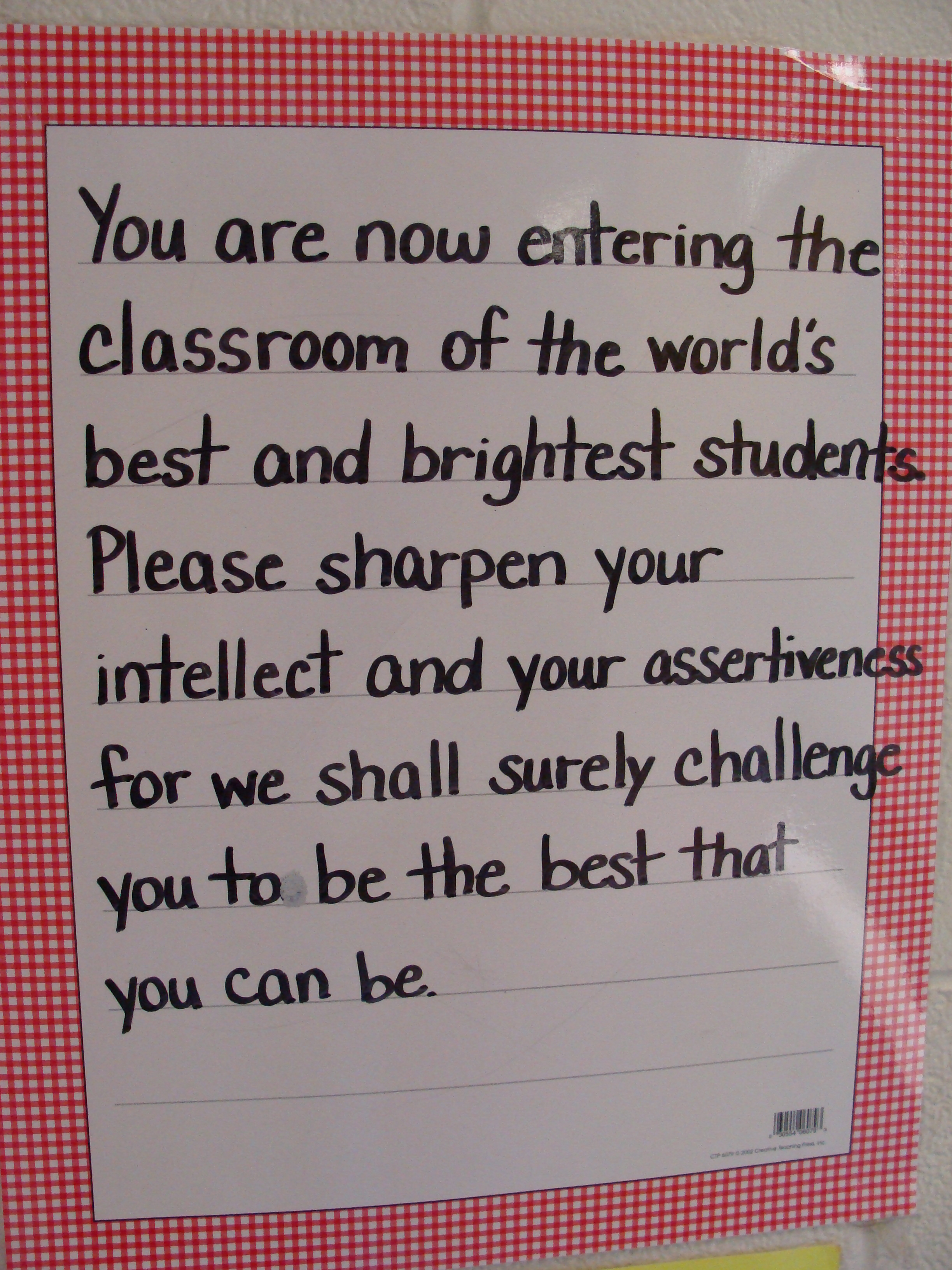
I am attaching a picture of a classroom I visited for a lesson study. I took a picture of this poster because I was impressed with how specific the procedures were as the teacher had discussed them with her students.

Realizing procedures must be specific for students to follow is nothing that you are taught in college, but rather something that you develop over time as a seasoned teacher.
A teacher at my school recently shard an article by Lee Canter from his article “More Than Names on the Board and Marbles in a Jar” which I wish someone had shared with me when I first started my teaching career. I will share this excerpt from his article with you…
“First, whenever teachers want students to follow certain directions, they must teach the specific behaviors. Teachers too often assume that students know how they are expected to behave. Teachers first need to establish specific directions for each activity during the day ‑ lectures, small‑group work, transitions between activities, and so forth. For each situation, teachers must determine the exact behaviors they expect from the students.”
33 Classroom Procedures to Consider before School Begins

- How will students obtain a sharpened pencil?
- How will students line up?
- How will students take turns going to the bathroom?
- What will students do while waiting in line?
- How will students prepare when going home?
- How will students turn in homework?
- How will students communicate with parents?
- How will you record behavior?
- How will students work in centers?
- How will students work in groups?
- How will you get your students’ attention when they are doing an activity?
- How will students handle manipulatives appropriately?
- How will students turn in their work?
- How will students label their papers?
- What will students do when they arrive at school?
- Where will students place their backpacks and personal items.
- How will students sit appropriately when you are talking?
- How will students show you they are listening?
- How will students sit on the carpet?
- How will your rewards/consequences system work? What are the students’ responsibilities?
- How will students solve a disagreement?
- What will students do when they have a question?
- What will students do when they need to use the restroom?
- What will students do when they are tardy?
- What will students do when they are absent for missed assignments?
- What will students do with communication (notes etc.) from parents?
- What will students do if they are sick?
- How will students travel in the room?
- How will students address the teacher and other adults?
- How will students answer the door?
- How will students act when there is a visitor in the room?
- How will students use their voices when working in different situations (testing, cooperative groups, independent work).
- What will students do when another student is bothering them or bullying them?
Teacher Discount Day at Mardel’s
In case you live near a Mardel Educational Supply store, make plans to visit this coming Thursday, July 21st. They will be having a 20% sale off of all educational products. They will be having extended store hours from 8 am to 10 pm. I can’t wait!

Free Math Worksheets
I just found a great place to get lots of math freebie worksheets and I wanted to share… http://www.helpingwithmath.com/resources/worksheets.htm. There are lots of basic skills worksheets such as rounding, counting, telling time, temperature, addition, subtraction, multiplication…etc.
Money Activities Published on TPT
I just posted my new Money Activities Unit on TPT. Below are a few pictures of the unit. There are 39 pages of activities and worksheets for coin recognition and coin counting including cooperative learning games to compare coin amounts, word problems, and mini assessments. These activities are easily differentiated because I have included scaffolded levels difficulty with several of the games and worksheets.
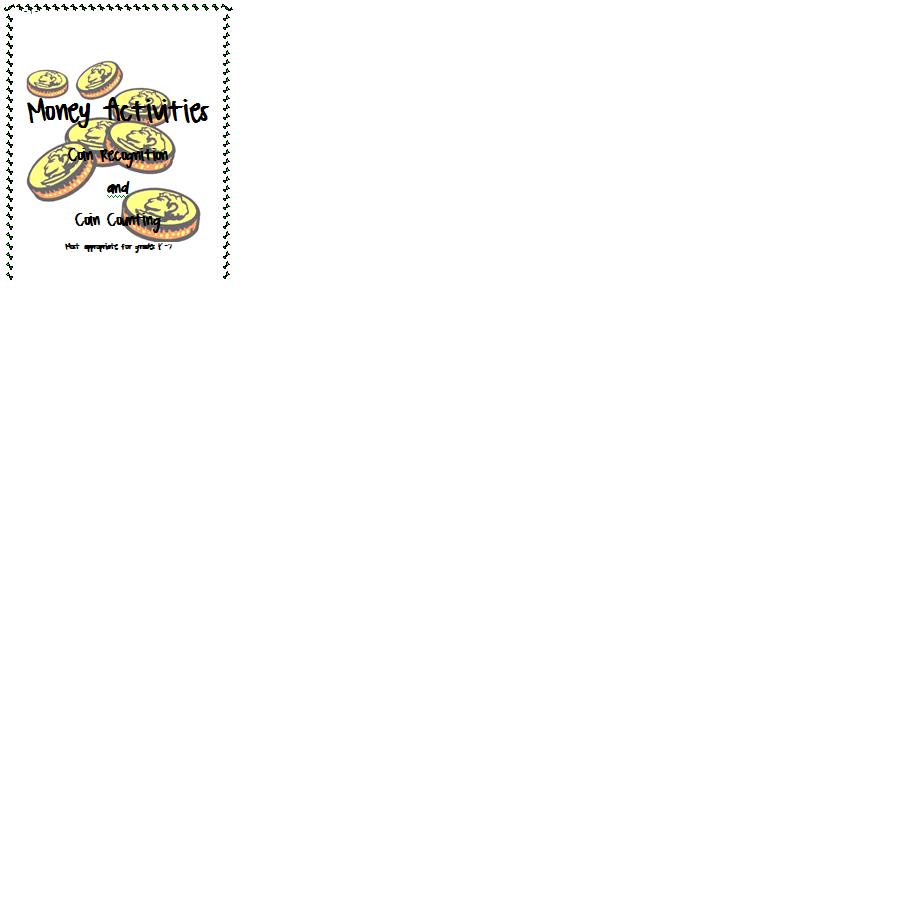

Money Unit Coin Recognition and Counting
No Cost Incentive for Passing Math Facts Races
At the end of this school year, there was no money in the budget for rewarding the students who had passed their math facts. I had already held a popcorn party and an ice cream party earlier in the year to reward students who had passed their facts, but these came with some cost and donations. I needed a no cost way to provide rewards to students who had passed their facts race. A few of my colleagues helped me think of the idea to give students a free dress code day. I am attaching the ticket I made to give to students who passed their test. You can change the date on the page to whatever date you are holding the free dress code day if you would like to use this idea. Math Facts Free Dress Ticket
Free Multiplication Drill Sheets Which Don’t Repeat Facts
I wanted to share these multiplication drill sheets which I acquired from a great math coach at another school. There is a sheet that has multiplication facts 2-10, 2-12 and an addition sheet that has facts 1-9. The facts don’t repeat with the commutative property (turn around facts), and they are the ones I used with the teachers at my school in my former post on June 23rd. I am sharing them with her permission below.
Addition Test Multiplication Facts Test Facts 2-10 Multiplication Facts Test Facts 2-12