




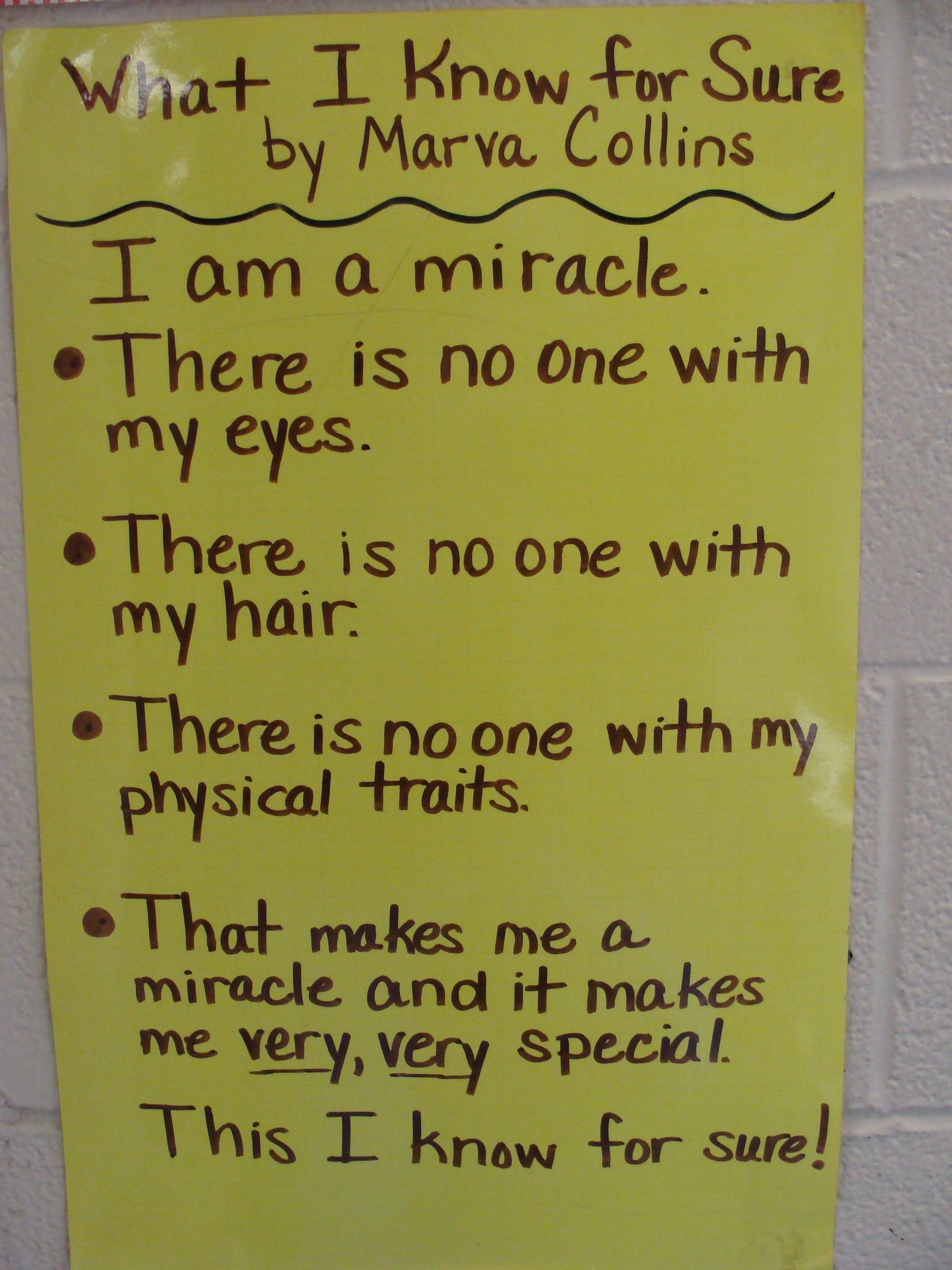


You Can Learn Something From a First Grader…
This past week I was asking a first grader how she had solved a math problem. When she showed me how she had used her fingers, I realized something amazing. She actually saw doubles on her fingers. I had never paid attention to exactly how students had used their fingers to solve problems. She used each hand as the separate addends in a problem, but more specifically she used each hand as the addends of an addition problem with doubles. So for example, she was easily able to see that 4 and 4 make 8 and that two more fingers (doubles plus 2) make 10– put one more finger up on each hand to make five fingers on each hand or ten fingers altogether. She used this strategy fluently, but it had never dawned on me to see patterns with doubles on two hands. I had always thought of the number four as just four fingers on one hand alone–not as two fingers on two different hands.


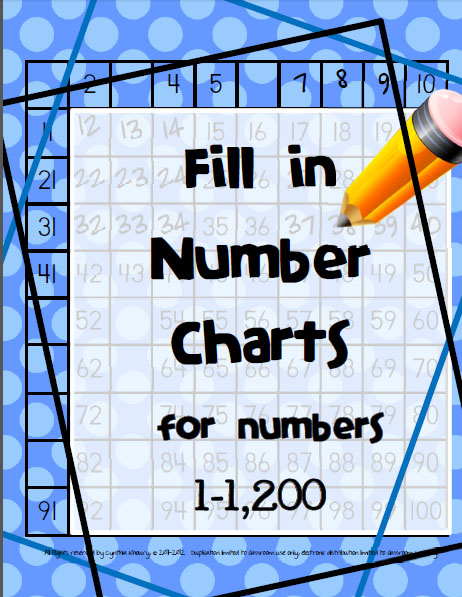
Can Your Students Count past 1000?
While working with students especially in intervention groups, I have found that they have difficulty passing a century number–both going forwards and backwards. Their counting is just fine when they, for example, count 695, 696, 697, 698, 699, (VERY LONG PAUSE). At this point with some prompting students are finally able to figure out 700. But this type of struggle occurs on a regular basis. The struggle is even worse when you ask a student… What comes before 700? What is one less than 700? (Long silence accompanied by a blank stare) Asking questions like these to fourth graders one would expect a quicker answer. Could it be that when students make it to the 300’s chart we just expect that they have discovered all numeric patterns. Somewhere amidst passing the students on to the next grade level someone forgot to mention that this is just the first few sets of numbers, and that numbers go on forever in a repeating pattern. The second grade teacher thinks the third grade teacher will teach this. The third grade teacher expects that they should “already know this” and so the baton is dropped, and another student treads on a shaky foundational understanding of number. Some students do make this mathematical connection without being explicitly told, however others do not, and need to be presented with a task and questioning that will help students discover the repeating patterns in number.
Because I have seen no publishing companies extend number charts past 300, I developed these for my school. These charts are extended to 1200, so that students can recognize the repeating patterns. Most of the charts have a probing question at the bottom to help prompt discovery of patterns. Most of the charts also start and end ten numbers before a multiple of 100 so that students are able to build understanding and find patterns before and after multiples of 100. If you click on the link, you will be directed to TPT to get a few charts for free by clicking on the preview download! There are over 70 pages of number charts included.


Easy But Cute Back to School Bulletin Board
Here is a snapshot of what we worked on putting up last week for open house in our main hallway. I still feel like it needs a little pizzazz or sparkle, but we got lots of complements on the board all day! You may not be able to tell from the picture, but we hot glued crayons and pencils into the open pencil box. There is also a magician’s wand in the backpack with the folders that doesn’t show up very well. Hence the theme of the board…”Welcome to a Magical Year.” That has proven to be a curiosity that stops adult traffic in the hall. I hope you can use this idea and improve on it. Post a picture and link to my sight if you do. I would love to see it.

Cute Bulletin Board with Social Studies and Math Integrated!
Well, I haven’t been behind a computer screen much at all this week because I have been putting my room back together and decorating my door. I don’t have many bulletin boards to cutesy up, so I take out my cutesyness on my door. I thought I would share this idea with you all. I came up with this idea last year when there was discussion about integrating science and social studies into math and literacy. I had read the book America by the Numbers: One Nation which made me want to decorate my door with a flag and ask questions about the number of stars, stripes, etc to infuse math. 
The only problem I faced was finding an appropriately sized flag. To buy a large one was too much money and too large for my door. The only other ones I had seen while shopping were too small. Just my luck last week I was talking to a colleague who didn’t want a large flag covering up her only window. So, we traded flags because I had an extra one that was smaller from somewhere rolled up in a closet. Now, what to use for a background? I was originally going to use some cloud bulletin board paper at available at teacher stores when I stumbled across this adorable sparkly fireworks fabric at Jo-Anne’s. A little plug for Jo-Anne’s–they offer teacher discounts! Then I made some white stars for the door with math questions in them to stimulate student thinking. If you want to use this idea, I made the stars available for free here: StarsForFlagBulletinBoard.

Back to School Sale on Teachers Pay Teachers!
Hey, everyone, mark your calendars for August 12th and 13th. That is next Sunday and Monday. TPT will be having a sale. All items will be on sale UP TO 28% off. The products in my store will all be 28% off! Be sure to grab all of the items you have been swooning over. Now is the time to stock up!

Should You Sell Products on Teachers Pay Teachers?
I have noticed a lot of people read a very old post I had done on this topic, so I thought I would re-post about the growth I have seen in my endeavor. I joined TPT in September of 2008. I put a few items up which were only one page that I charged $1 for. Every now in a blue moon one of them would sell , and so I wasn’t very motivated to work hard at this. Last spring (2011) I started seeing the emails from TPT about Deanna Jump who had made more than her teaching salary. I thought, “What am I missing here?” From that point on, I got very serious about selling my items on TPT. I got software to turn my items into PDF files. All summer of 2011, I worked many, many hours to put materials up on the TPT site. I think I sold one item all last summer. Then August came and I made $11.58. Mind you previous to this for all the 3 years I had products up, I had only made about $11. Then September came, and I made $16.74. It was at this point that I decided to upgrade my account and pay the $60 a year. Previously I had the basic account where TPT takes a pretty large percentage of your sales however you pay no annual fee. When you decide to become a premium seller, they only take 15% of your sales–which is totally worth it if you are selling $15 a month or so. My sales only grew from there and steadily increased each month of the school year until I was making more than $100 a month. Each time I got an email saying that I had sold an item, it just made my day. I find it so gratifying that someone actually values the work that I do, and uses it to teach their own students. I readily share the items with my colleagues at work, but somehow it is different when someone searches out what you did and finds it useful.
I won’t sugar coat the amount of work that went into what I did. Selling on TPT takes work and patience. I spent nearly every night sitting on the couch with my laptop after school working on my blog or on my products, and most of the summer that way as well. I definitely would have made a lot more money with a part time job or doing after school tutoring. However, the work that I do on making my products as perfect as possible helps me during the day with my ‘real’ job because I use those things with the students I work with. I just make them as pristine as possible to sell at home. Selling an item on TPT is gratifying because the extra hours I spend working on something are actually rewarded. I have learned SO much from this venture through blogging, through selling, through the comments on my blog, and on TPT. I would dare say selling on TPT has given me an edge because I am learning through a world wide community which I hadn’t known was out there previous to this venture. I am very thankful for this and for friends who encouraged me to pursue this further when I had only a small measure of success. If you have the time to work outside of school and want to learn a lot from a community of talented teachers, then I would recommend you join the ranks of successful teacherpreneurs, too.

Click to go directly to the TPT site and begin selling now.
To Teach or Not to Teach the Cent Sign?
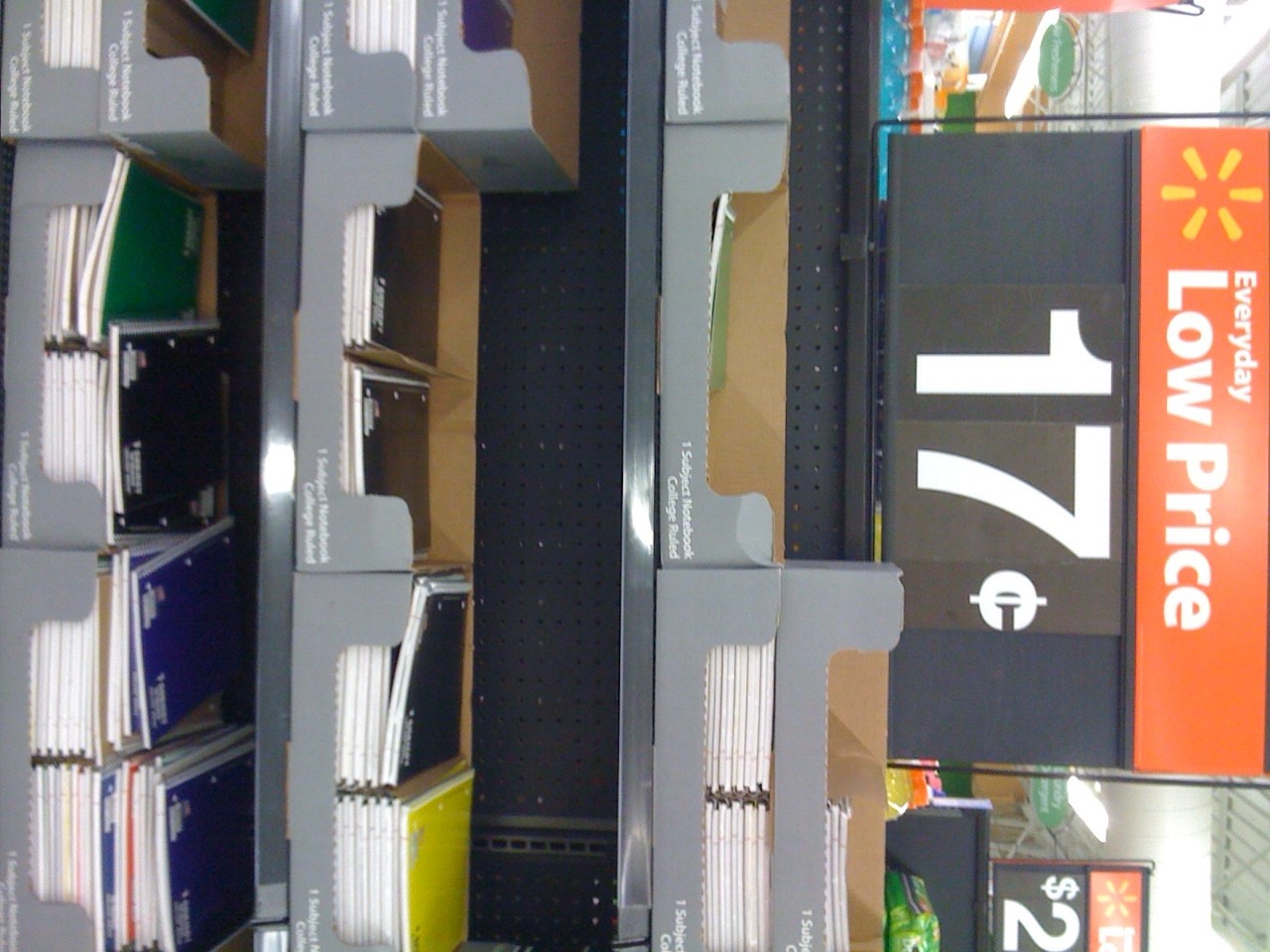
I love it when I’m right. The other day I was having a friendly debate with another teacher about whether or not to teach the cent sign with the new common core standards. After all, sometimes students use the dollar sign at the same time along with the decimal point and get them confused. I argued, however, that you still see the cent sign at times in stores , but this person argued that you don’t see the cent sign anymore…well, here you go…the cent sign at back to school time! Seventeen cents for a spiral bound notebook. My proof that IT IS STILL IN USE, so we still need to teach students how to read them!
I’ll let you in on my little secret. Now beware it is a little simple and silly, but kids love silly and so my story works.
The cent sign at one time was the dollar sign’s girlfriend, but they broke up. Then the dollar sign and the decimal point got married, so they are seen together almost always. The cent sign got her feelings hurt when the dollar sign got married to the decimal, and so she ran away. THE END.
Adapt and embellish the story to fit your personal style. Now just remind your kids of this story any time they get confused about the notation of dollars and cents, and they will remember which sign to use.
Office Depot NOW Decides to Sweeten Teachers’ Shopping Deal!
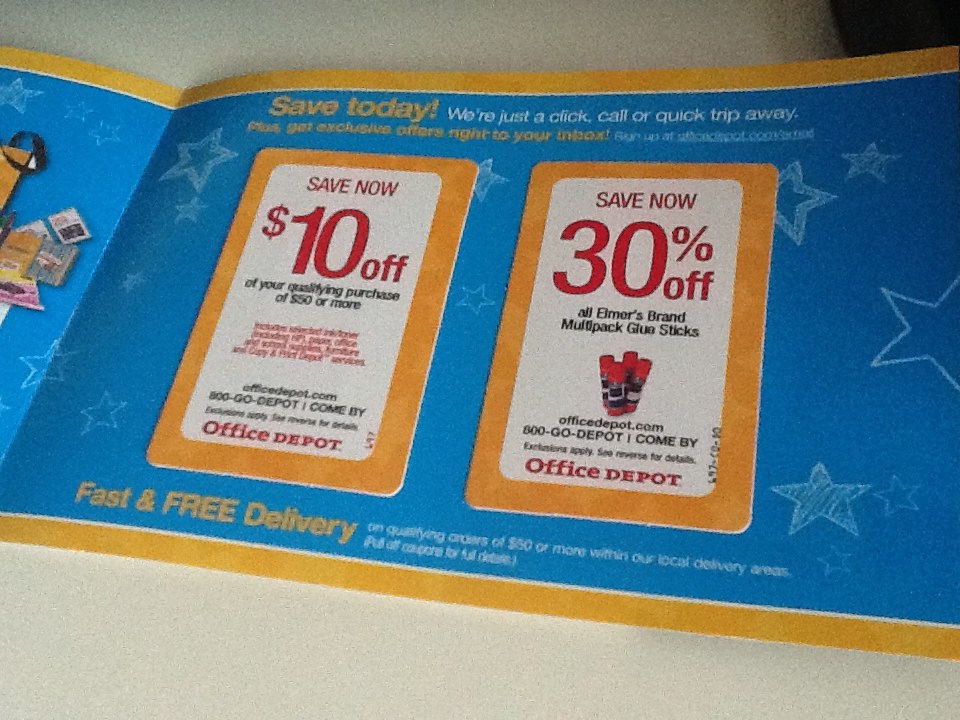
Yesterday, I stepped on out to the mailbox, and what did I find? Office Depot Coupons! Not only that, but some extra good news. Office Depot is now offering teachers a 10% discount all year long! They have redeemed themselves. I had always felt it was disappointing to shop at Office Depot and to have a teacher “discount card” that didn’t give you a discount on much…hmph!
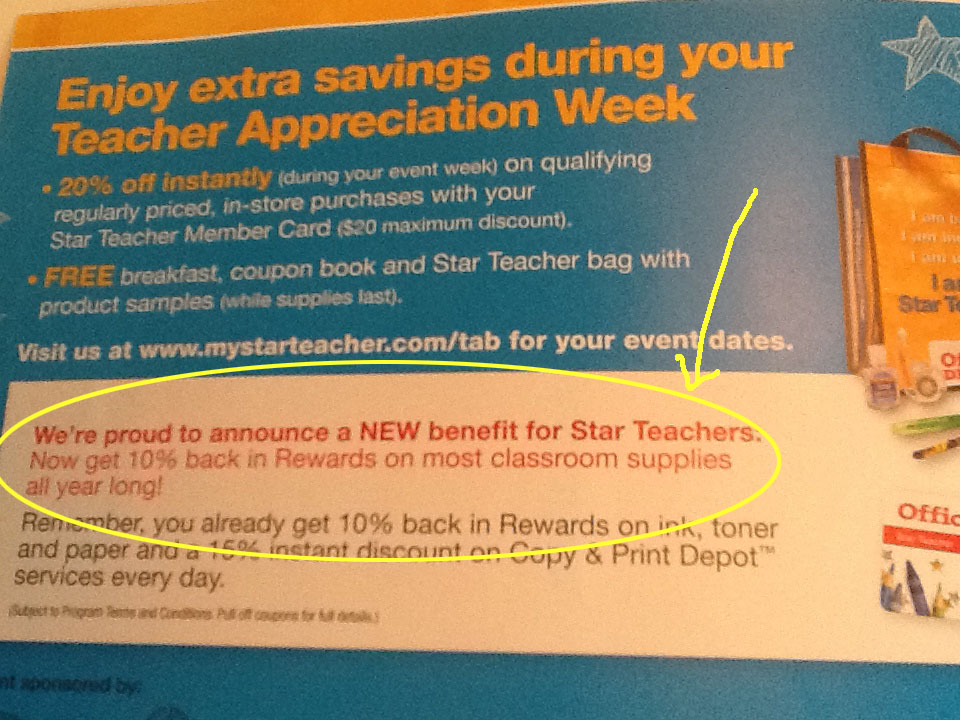
For Teacher Appreciation week they are offering a 20% discount and a Teacher Discount Bag with product samples (my favorite!). The coupons in the mailer are for $10 off a $50 purchase and for 30% off packs of Elmer glue sticks–I still don’t know if that will beat Wal-mart’s glue stick deal at 0.10 cents! I’m feeling a little Black Fridayish about August’s back to school sales.
The ABSOLUTE BEST COMMON CORE RESOURCE EVER!
Have you been rolling your pants up to wade through the language of the common core standards? Oh, look, I think I just saw an octopus swim by! Well, I have! I have been working with the other math coaches in my district to build a guide for many days (both this year and last) to help decipher the common core standards into a teaching guide. After all of that hard work, I have happened across the most amazing resource to help teachers understand the standards. North Carolina has taken each and every language and math standard and broken them down into much more friendly language for teachers. In North Carolina’s own words, they have answered the questions: “What does this standard mean that a student must know and be able to do?” These standards are complete with examples, too! They have unpacked the standards for us! I don’t know about you, but I am really starting to be fond of North Carolina. Take a look at the example below. If you click on it, they you will be directed to the North Carolina website.

Back To School Teacher Appreciation Discounts and Events!
Don’t you love to walk into Wal-mart during back to school season? I do. I want to buy 10 boxes of crayons for 25 cents even if I don’t need them. And who can pass up spiral notebooks for 20 cents? Well, in the spirit of back to school season which is soon encroaching, I thought I would whip up a list of teacher discounts for you. Teacher discount days make back to school season so much more fun!
- Office Depot is hosting the event August 5th-11th, 2012. During this week you will enjoy a hefty 20% off of your purchase with your star teacher discount card. If you wait until August 11th from 9-11 you will also enjoy a teacher breakfast, and giveaways in my area. If you live somewhere other than near me in good ole’ Arkansas, you need to put in your zip code here to find out when the event will be held.
- At Staples’ back to school event they will be giving away free gift bags to the first 100 customers. Click here to find out when the event will be held in your area. (I especially love staples for their crazy shaped paper clips–ones that look like purses, high heels, flowers, animals, etc.!)
- Mardel’s will be holding their education sale on July 19th, 2012. They will be offering 20% off of all of their educational products and school supplies. They will also be extending their hours from 8 a.m. -10 p.m. You may also register to win an iPad!
- Big Lots (news to me) also has a teacher appreciation day. They will be hosting one Saturday, August 11, 2012. To find a Big Lots store near you click here.
- Office Max offers lots of goodies for teachers as well on their event day. You get a free tote bag and coupons. Also, they are offering 25% off of everything you can fit inside your tote bag. To find out when their event is held, click here to input your zip code. Sign up for a teacher discount card when you go to enjoy 25% off. (I am especially impressed with the way Office Max emailed me the details of their teacher appreciation sale after reading on my blog that I was unable to get details of their sale by calling the store.)
Make sure you bring your teacher id when you go! Happy shopping!